(+86) 19868659360
support@riceroodcatsproduct.com
Why Vertical Space Matters
Indoor cats need elevated vantage points, multi-level routes, and legal scratch zones. Without these, they improvise with sofas and door frames, or show boredom, nocturnal zoomies, and conflict with other pets. A well-designed cat treecreates a dedicated feline landscape for climbing, resting, and scratching.
Key benefits at a glance
- Energy outlet & stress relief: Climbing and jumping help burn energy and calm the mind.
- Healthy scratching: Supports nail care and tendon health while leaving scent/visual marks.
- Security & confidence: High perches feel safe and help anxious cats decompress.
- Multi-cat harmony: Vertical layers create detours and reduce face‑to‑face showdowns.
- Environmental enrichment: Varied textures, heights, and entry points add exploration.
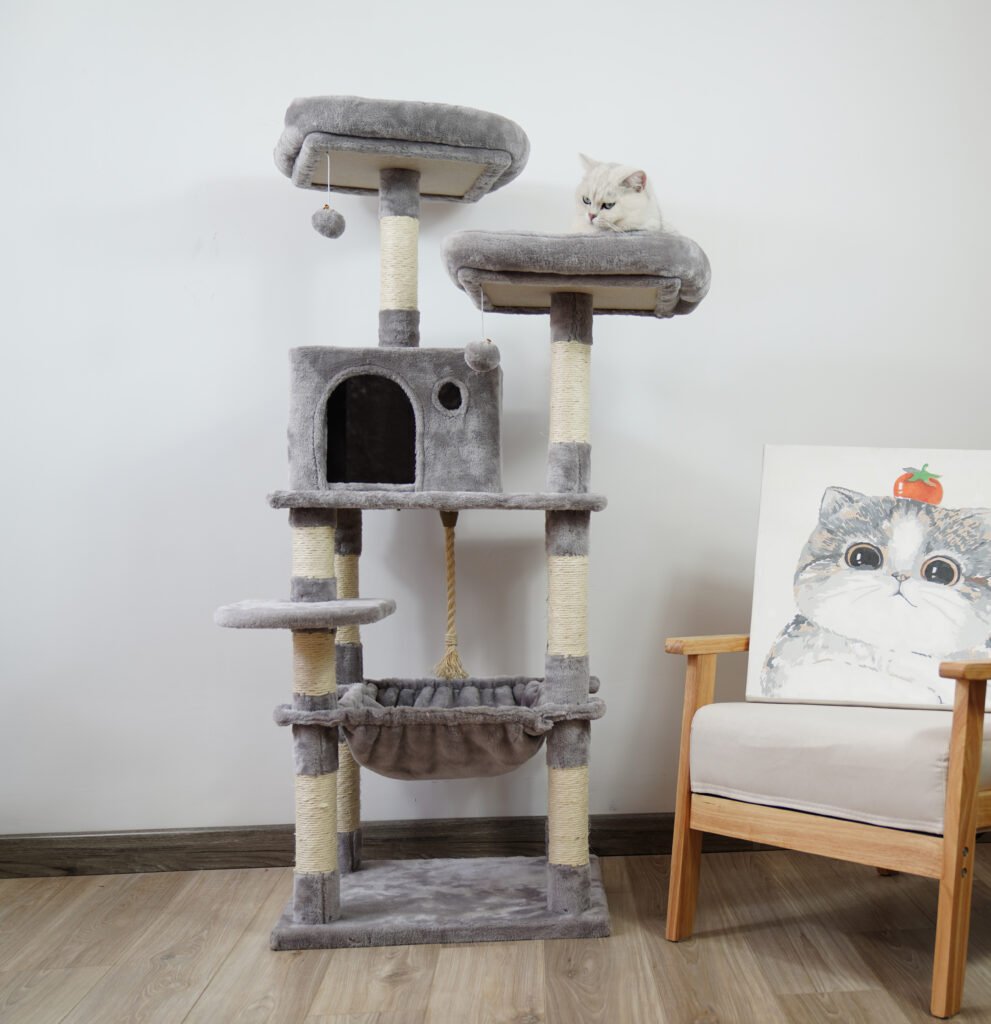
How to Choose a Cat Tree: 6 Essentials
1) Stability & Load
- Base: Wider = safer. For compact models, ensure no wobble.
- Structure: Main posts ≥ 8–10 cm diameter resist twisting; wall anchoring or ceiling tension adds safety for athletic or multi-cat homes.
- Capacity: Leave headroom beyond stated load, especially for heavy or multiple cats.
2) Height & Tiers
- Good heights: ≥ 120 cm for most homes; consider floor‑to‑ceiling or wall systems for active or multi-cat setups.
- Traffic planning: Provide more than one route up/down to prevent bottlenecks.
3) Materials & Feel
- Scratch surfaces: Sisal rope/fabric, corrugated cardboard, or textured wood. Replaceable parts save cost long‑term.
- Body: Plywood/solid wood is sturdy; plush is comfy but hair‑prone—cotton/linen/tech fabrics are easier to clean.
- Odor & safety: Low‑VOC boards and removable, washable covers.
4) Space Fit & Aesthetics
- Small spaces: Wall‑mounted/corner/door‑frame tension designs save floor area.
- Style: Wood tones, light neutrals, or modern minimal. Prefer replaceable posts to keep the look fresh.
5) Functional Details
- Cave/hammock: For shy cats or cold seasons.
- Observation deck: Place near windows to increase daily use.
- Modularity: Expand as cats age or as the family grows.
6) Match by Cat Type
- Kittens: Shorter gaps, soft edges, gentle ramps.
- Adults: Balanced mix of platforms and posts.
- Seniors/plus‑size: Wider platforms (≥ 40×30 cm), anti‑slip, smaller step gaps; avoid big jumps.
- Timid cats: Extra stability + covered retreats; avoid loud traffic areas.
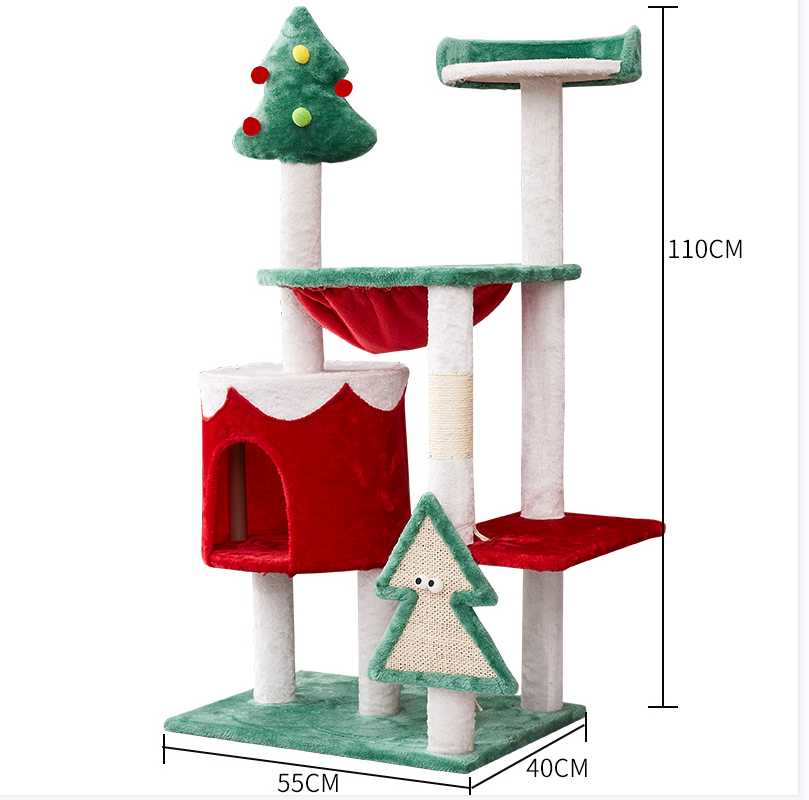
Placement & Training
- Best spots: By a window (sun/view) or living‑room corner (watch humans). Avoid behind doors and near cooktops.
- Route design: Ensure at least two paths up/down so cats don’t get trapped.
- Training tips:
- Hide treats/catnip on platforms.
- Use a wand toy to “draw” the route across levels.
- Place a favorite blanket or bowl on a mid‑upper platform at first.
- Safety: Install wall brackets/anti‑tip kits; shim uneven floors.
Care & Maintenance
- Weekly quick clean: Lint‑roll or vacuum hair; check loose screws or fraying rope ends.
- Monthly deep clean: Wash covers, air out or sun‑dry; use mild cleaners only.
- Replace parts: Swap worn posts; repair broken edges promptly.
FAQs
1) My cat ignores the tree—what now?
Reposition to a window or social hub; pair with treats and a wand toy to establish a route. Place the tree near old scratch targets (sofa arms) to redirect.
2) Tiny apartment—still possible?
Yes. Use wall‑mounted, corner, or door‑frame tension systems (depth ~25–35 cm).
3) Safe with kids or dogs?
Anchor to the wall and choose sturdier builds. Keep upper routes out of children/dog reach to reduce interference.
4) Renting—no drilling allowed?
Choose floor‑to‑ceiling or heavy‑base freestanding designs; if using adhesive anchors, follow the maker’s reinforcement steps.
5) When to add a second tree?
If you see queues, guarding of the top perch, or chase‑offs, add another tree in a different room and connect routes with shelves/ bookcases.
Quick Picks by Scenario
- Easy starter: 1.2–1.5 m freestanding, dual scratch posts + lookout deck, weighted base.
- Small homes: Wall‑mounted/corner combo in a zig‑zag route.
- Ceiling‑tension: Many tiers, tiny footprint; secure top pressure and side anchors.
- Large/plus‑size cats: Platforms ≥ 40×30 cm, posts ≥ 10 cm, reinforced joints.
- Multi‑cat households: Two–three independent up/down routes and at least two top perches.
- Aesthetics‑first: Wood + fabric mix, replaceable posts, one calm palette.
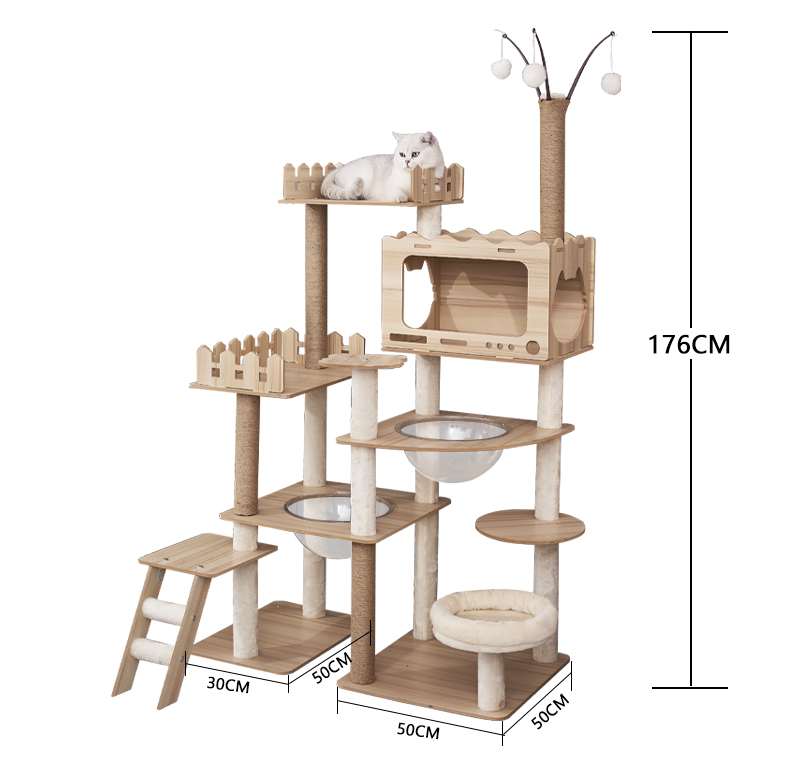
Pre‑Purchase Checklist
- Measure ceiling height / window sill / available width; check door swing.
- Identify anchor wall if wall‑mounting.
- Match platform sizes and step gaps to weight, jump habits, and temperament.
- Prefer replaceable parts and washable surfaces to lower lifetime cost.
Summary
A cat tree is not décor; it’s essential furniture that meets feline instincts and prevents behavior issues. Focus on stability, routes, materials, and placement and you’ll build an indoor “mountain range” that cats actually use.